This plant may be available to buy
Click the banana to see

|
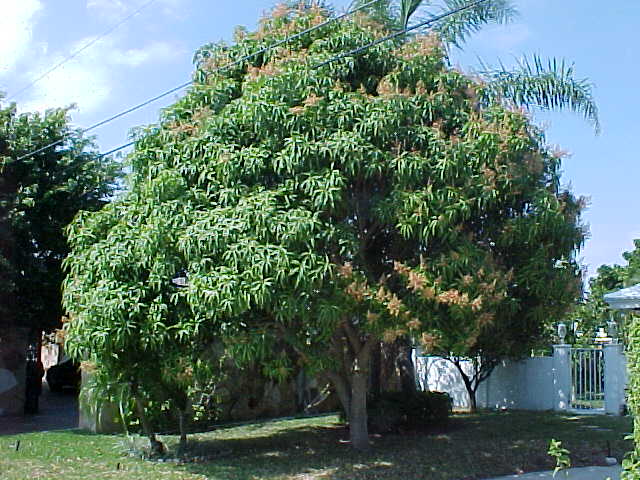
Mango click pics to enlarge |
|
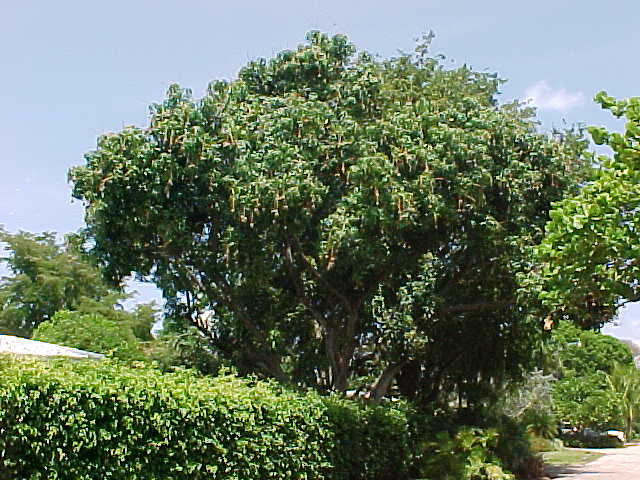
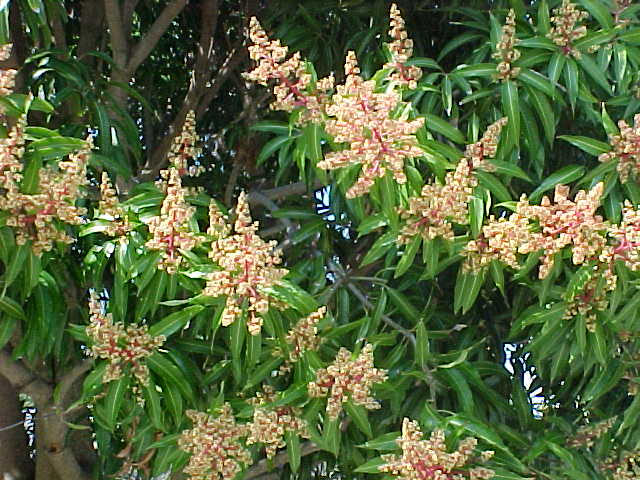
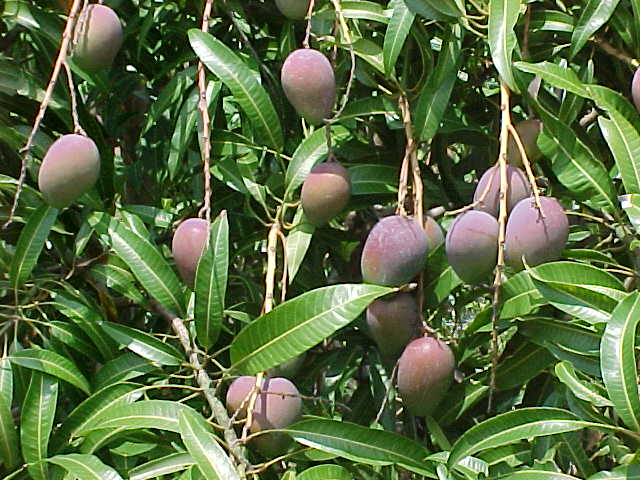
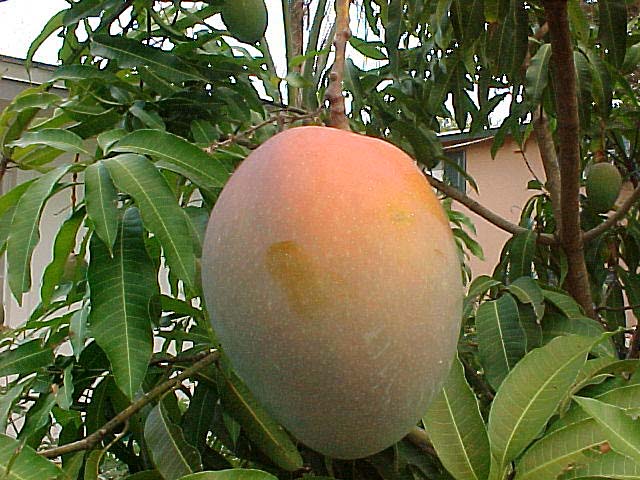
Zone 10 Mango is one of the most significant trees on the planet. Mango fruit is important in its native lands and now also eaten worldwide. Mango is also one of the oldest cultivated trees proven by writings from India over 4,000 years old. Fairchild Tropical Gardens in Miami boasts the world's largest collection, over 180 mango cultivars Native to countries such as Malaysia, India and Burma, mangos are very large trees, to 90-100 feet in their homelands. Due to their size, they are also important for shade as well as food. The tree in the photo is an adolescent. This one is much larger growing here in Fort Lauderdale near its local maximum of about 40 feet Due to tree size, harvesting mango fruit can be difficult. There are smaller tree varieties such as Graham, Cogshall, Julie, Fairchild, Mallika, Carrie and Glenn. Prune aggressively for shape and size to keep them smaller The leaves are green, leathery and large, to 12 inches across. New leaves can be somewhat red or yellow in color. Mango flowers appear in spring to summer, depending on variety, are sweetly fragrant and attractive About 10 mango varieties are grown in South Florida producing fruit from 3/4 lb. to over 4 lbs. each This page lists 143 named varieties Different mango types also produce at different times of the year. Also different colored fruits are seen and likewise around the tropical world, local favorites vary in size, color and taste. Although some people are allergic to the meat, mango is highly favored in Eastern cooking as well as fresh fruit Pick mangos fully ripe off the tree and eat immediately for maximum taste and sweetness. You can also be lazy and just pick up fallen fruit but check often as your local critters will get there fast if you don't Plant mango in full sun in decent (sandy is OK), well-drained soil. Water very regularly (about 2 years of irrigation) until established and be sure to fertilize properly. Be watchful for common pests such as scales and sooty-mold Weather is a factor in fruit production from year to year. For example, if it's too humid during the time of fruit setting, fungus can be a problem to fruit and leaves. Even after fruit is set, anthracnose fungus can attack. Be prepared to spray with copper fungicide to save your crop The most recent 2009 recommenfdations from Fairchild Tropical Gardens indicate young trees should be heavily mulched, 6-8 inches starting 8-12 inches away from the trunk. Foliage should receive nutritional spray in September. A quality 8-2-10 fertilzer is good for the first few years before fruiting age is reached. Thereafter, a 0-0-50 formulation is indicated. Apparanetly sufficient nitrogen is supplied by the decaying mulch, phosperous is not needed but plenty of potassium is required for fruit vigor, quantity and quality Irrigation in South Florida should stop after two years; rain only. Pruning when young to promote shape and air flow is important. Air flow is a deterent to disease and pests. Eliminating added water also promotes health and fruit quality. For South Florida, some varieties recommended by Fairchild include: 'Jean Ellen', 'Angie', 'Rosie Gold' and 'Manilita.' |